
Need help signing in? Watch this video to learn how sign in the GPA Member Access platform.
Need help signing in? Watch this video to learn how sign in the GPA Member Access platform.
A Canadian laboratory pioneering the development of privacy-enhancing technologies to enable innovative health research without compromising privacy is being recognized with the 2026 Privacy and Human Rights Award.
This year’s winner is the Electronic Health Information Laboratory (EHIL) at the CHEO Research Institute, a leading pediatric health research institute in Ottawa, Canada.
The award is a joint initiative of the Global Privacy Assembly (GPA) and Access Now. It celebrates outstanding leadership or initiative in the fields of data protection and human rights.
Since 2005, EHIL, founded and directed by Dr. Khaled El Emam, Senior Scientist at the CHEO Research Institute, has helped to shape responsible data use and stewardship, while accelerating rights-respecting innovation and understanding around the world. The lab’s ground-breaking work in privacy-enhancing technologies enables health systems, researchers, and artificial intelligence (AI) developers to use data while protecting individuals’ privacy, dignity, autonomy, and safety.
Philippe Dufresne, Chair of the Global Privacy Assembly and Privacy Commissioner of Canada, and Alejandro Mayoral Baños, Executive Director of Access Now, will present the award during a ceremony at CHEO, in Ottawa, Canada on Monday, July 20, 2026.
Dr. El Emam, Canada Research Chair in Medical AI at the University of Ottawa, will accept the award on behalf of his team.
Data is one of the most important resources of the 21st century – it can support and fuel innovation, and how it is managed and protected can shape an organization’s ability to lead and succeed globally. The privacy-enhancing technologies that the Electronic Health Information Laboratory at the CHEO Research Institute have developed support health data sharing for purposes such as supporting research and public health surveillance and analysis, and responsible AI development – without compromising privacy.
Philippe Dufresne
Chair of the Global Privacy Assembly and Privacy Commissioner of Canada
As governments, researchers, and institutions increasingly rely on data to address global challenges, protecting privacy has never been more important. The Electronic Health Information Laboratory’s work demonstrates that privacy is not an obstacle to innovation, but rather a foundation for public trust, accountability, and protecting fundamental human rights. We are proud to recognize a team whose pioneering work is helping shape a future where technology serves people without compromising their fundamental human rights.
Alejandro Mayoral Baños
Executive Director, Access Now
Date: Monday, July 20, 2026
Time: 10:00 am to 12:00 pm ET
Location: Max Keeping Room, W1306 and W1308, CHEO, 401 Smyth Road, Ottawa, Canada
Journalists who wish to attend the award ceremony in person are required to RSVP in advance. The ceremony will also be streamed online.
To register to attend or access the live stream, please contact the Office of the Privacy Commissioner of Canada: [email protected]
For other general and media enquiries, please contact:
Global Privacy Assembly Secretariat
[email protected]
Office of the Privacy Commissioner of Canada
[email protected]
Access Now
[email protected]

The Global Privacy Assembly (GPA) Executive Committee is excited to announce details about the 48th GPA Annual Conference. This year’s event will be co-located in Brussels, with the IAPP Europe Congress 2026, offering an exceptional opportunity for global privacy and data protection professionals to connect, learn, and collaborate.

In this issue:
Access the Newsletter here
Statement by the Chair of the Global Privacy Assembly to mark Data Protection Day [FR]
Philippe Dufresne, Chair of the Global Privacy Assembly and Privacy Commissioner of Canada, today issued the following statement to mark Data Protection Day.
In today’s interconnected world, data knows no borders. Global collaboration is essential as personal information moves around the world at unprecedented speed and scale.
We must also work together to address evolving issues such as children’s privacy, and the impacts of artificial intelligence and cross-border data flows on privacy.
Data Protection Day is an excellent opportunity to highlight the ongoing efforts of organizations around the world to promote privacy and the importance of collaboration. Advancing data protection globally is better accomplished when a diversity of perspectives and experiences come together to build collective and individual capacity.
As Chair of the Global Privacy Assembly, I am committed to a vision of strategic cooperation among privacy and other regulators, and external stakeholders, including civil society, industry and public institutions.
This will support Assembly members in maximizing our collective voice and impact to provide global leadership that supports innovation and ensures that individuals around the world can confidently reap the benefits of a digital society.
Webinar on Data Free Flow with Trust
The GPA Global Frameworks and Standards Working Group will be hosting a free webinar on Data Free Flow with Trust (DFFT).
Ensuring safe and free flows of personal data globally is increasingly important, as more organisations rely on the flow of data to reach customers around the world. This is demonstrated by the work underway in various forums to progress DFFT, including the GPA, who adopted a Resolution on DFFT in 2024, the OECD, whose Expert Community continues to work on projects to address specific DFFT-related issues, the Council of Europe, the G7 and others.
Webinar details
Date: 11 June 2025
Time: 1.00pm – 3.00pm BST (UTC+1)
Speakers:
Beatriz de Anchorena, Head of AAIP Argentina and Chair of the Council of Europe Convention 108 Committee
Clarisse Girot, Acting Head of Division, Data Flows, Governance and Privacy – STI Directorate, OECD
Olivier Matter, Head of International Cooperation, EDPS
Marc Schlegel, Legal Officer, BfDI
Lori Baker, Vice-President, Regulatory Compliance and Director of Data Protection, Dubai International Financial Centre Authority
Chris Taylor, Chair of the GPA Global Frameworks and Standards Working Group and Director of International Regulatory Cooperation, ICO UK
The webinar is open to all and will be of particular interest to GPA members, OECD and Council of Europe members; law and policymakers; and anyone with a current interest in international personal data flows. You can register to attend this webinar by completing this form:
The Global Privacy Assembly (GPA) has published guiding principles on data sharing, outlining 16 principles aimed at assisting organisations across various jurisdictions on how to share personal data safely for the public good.
The principles aim to give businesses, organisations and individuals the confidence to share data in a safe, fair and transparent manner for the public good. As the need for data sharing becomes increasingly relevant, the GPA decides now is the right time to make the document available for the wider public and directly help organisations meet their ethical responsibilities and build the public trust by upholding high privacy standards.
The 16 guiding principles outlined in the document include purpose of sharing, fairness and transparency, data protection impact assessment, sensitive data, privacy by design and default, and rights of individuals. The document also includes additional resources issued by the GPA that provide data sharing best practices and lessons learned since the COVID-19 pandemic.
Publishing these guiding principles now will better enable the GPA to promote the benefits that come with efficient and responsible sharing of personal data by public and private sector organisations, both in terms of improving choice or outcomes for the public and in driving competition and innovation throughout all jurisdictions.
The guiding principles were developed by the GPA’s Working Group on Data Sharing for the Public Good (DSWG), which identifies practical solutions for data sharing where there is a public benefit. Led by GPA Member the UK Information Commissioner’s Office, with input from a range of GPA members from all global regions, the guiding principles on data sharing were finalised in mid-2024 and later included as part of the DSWG’s annual report in late 2024.
The GPA hopes that the guiding principles document will now reach a wide audience across multiple jurisdictions. However, whilst the principles are intended to be generally relevant to different Data Protection and Privacy legislative frameworks in different jurisdictions, organisations should consult the relevant Data Protection Authority and their websites or resources for more detailed information about sharing data within a specific jurisdiction.
Next steps
The GPA will continue discussing these principles and their practical application. It will also focus on identifying further practical and pragmatic approaches on how personal data can be shared and used to enable innovation while protecting individuals’ privacy rights.
The DSWG will also continue developing proactive responses on any emerging data protection and privacy issues associated with data sharing, especially on sensitive or ‘special category’ data such as health data.
IPC highlights student privacy and digital literacy during Education Week 2025 [FR]
TORONTO, ON, (May 5, 2025) – Education Week is an opportunity to celebrate the vital role education plays in building a strong, informed, and inclusive society. As children and youth spend more of their lives online, it is also a timely reminder of the growing importance of digital literacy, privacy education, and responsible digital citizenship.
With teachers already planning for the next school year, the Office of the Information and Privacy Commissioner of Ontario (IPC) is marking the occasion by promoting resources to help schools and educators protect children’s privacy and equip the next generation to navigate
digital spaces safely and confidently.
“Children and youth deserve to grow up with the skills and confidence they need to navigate the digital world safely, responsibly, and with respect for their own and others’ privacy,” said Patricia Kosseim, Information and Privacy Commissioner of Ontario. “By teaching privacy early — at
school and at home — we can empower young people with the knowledge and agency they
need to protect themselves, make good decisions, and thrive in our increasingly digital world.”
Children and Youth in a Digital World is a strategic priority for the IPC, focusing on championing the access and privacy rights of Ontario’s children and youth by promoting their digital literacy and digital rights, while holding institutions accountable for protecting the children and youth they serve. To support this work, the IPC has developed several tools and initiatives for schools, educators, parents, and young people, including:
Digital Privacy Charter for Ontario Schools: The charter outlines 12 commitments schools can make to strengthen privacy protections for students and build trust with students and families.
The IPC is urging schools to sign the pledge before the 2025-26 school year.
Privacy Pursuit! lesson plans (Grades 2–8): Developed with MediaSmarts, these classroomready lessons align with Ontario’s updated curriculum and help teachers engage students in
learning privacy skills, spotting online risks, and reflecting on their digital footprint. Each lesson pairs with the IPC’s Privacy Pursuit! activity booklet.
Privacy Pursuit!: This free activity booklet is filled with fun puzzles and games to help children learn how to protect their privacy online, spot scams, and build empathy for others. It’s ideal for families to use during game night or one-on-one time with the kids.
Youth Ambassador Toolkit: Developed with input from the IPC’s Youth Advisory Council, this toolkit has everything students aged 12+ need to lead peer-to-peer conversations about privacy rights, digital literacy, and protecting personal information.
Info Matters podcast: Covers issues relating to students including, empowering women and girls in the digital world, teaching kids about privacy, growing up online, technology in the classroom, and teens, technology, and privacy.
IPC’s Instagram channel @ipc.ontario is a space just for youth, with simple tips, comics, and videos on protecting privacy, making smart digital choices, and understanding their rights.
Education Week runs from May 5 to 9, 2025, celebrating the role of education in shaping the next generation. Take the pledge now and sign the digital charter!
The IPC encourages educators, parents, and youth to explore its tools and resources to support privacy education and help children and youth build the knowledge and skills they need to be safe, informed, and confident online.
Media contact:

The Global Privacy Assembly (GPA) Secretariat invites interested member authorities to submit proposals to host the Global Privacy Assembly Meeting in 2027.
Please keep in mind that submissions must include the information under the following categories:
We encourage all interested member authorities to thoroughly prepare the proposals given the abovementioned categories to be highly considered in the process of evaluation.
The deadline for the submissions will be on 30 May 2025, close of business.
Please read the Guidance for Authorities for more details and contact the GPA Secretariat if you have any questions.
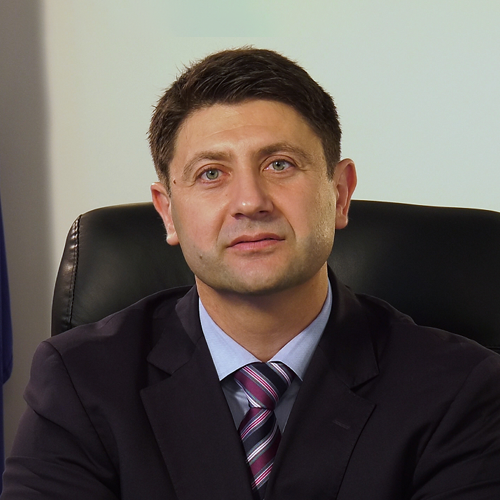
The Global Privacy Assembly (GPA) Executive Committee has unanimously elected the Bulgarian Commission for Personal Data Protection, represented by Mr. Ventsislav Karadjov, as GPA’s Interim Chair until October 2025. The unanimous decision of the Assembly was made during an extraordinary meeting last 17 December 2024.
The Bulgarian Commissioner succeeded Commissioner Josefina Román Vergara, outgoing Chair of the GPA and Commissioner of Mexico’s Instituto Nacional de Transparencia, Acceso a la Información y Protección de Datos Personales (INAI). The election of a new GPA Chair was necessitated due to the dissolution of INAI, following a constitutional reform in Mexico.
Mr. Karadjov is the Chairman of the Bulgarian Commission for Personal Data Protection since April 2014. He served two terms as Vice-Chair of the Article 29 Working Party and was unanimously elected as the Deputy Chair of the European Data Protection Board (EDPB) in May 2018. He is also a Member of the GPA Executive Committee since October 2023.
Mr. Ventsislav Karadjov holds a master’s degree in law from Sofia University’s Faculty of Law. His career spans leadership roles at Transparency International’s Bulgarian chapter and various international projects on anti-corruption and democratic institution-building. He also worked as an advisor to the Bulgarian Minister for Internal Affairs on international public security and anti-corruption matters and served as Chief Expert Associate to the 41st and 42nd National Assembly on matters related to the control of security services, special surveillance devices, and access to data retained by public security bodies.
The GPA Executive Committee expressed gratitude to Commissioner Vergara for her dedicated leadership and contributions to the GPA and looks forward to Commissioner Karadjov’s stewardship in advancing the GPA’s mission of promoting personal data protection and privacy worldwide.